The idea of U.S. residency by investment needs to be framed carefully.
This market is not limited by global access. Depending on the region, passport holders may already enjoy exceptional international mobility, and Singapore is one of the world’s leading wealth and financial centres.
So when a global investor searches for topics like “U.S. residency by investment,” their deeper motivation may not be travel. Some are thinking about permanence, others want to expand their family’s options, and some have education planning in mind.
That is why EB-5 should not be approached like a generic migration product for investors. It should be considered as a structured route to long-term U.S. planning.
First, clarity on residency, not direct citizenship
The United States does not offer a simple direct citizenship-by-investment route. EB-5 is an immigrant investor programme that can support a U.S. lawful permanent residency (green card). Citizenship may only become relevant later, subject to separate naturalisation rules and eligibility requirements.
EB-5 is not about buying citizenship. It involves investing in a qualifying U.S. commercial enterprise, supporting job creation, and completing a formal immigration process.
The U.S. Department of State explains that immigrant investor visas are tied to new commercial enterprises that benefit the U.S. economy through job creation and capital investment. A qualifying investment must create at least 10 full-time jobs for qualifying U.S. workers within the required period.
Why future planning matters more than urgency
High-net-worth families rarely make major decisions around only one life event. They plan in layers.
- Education.
- Career access.
- Business continuity.
- Wealth preservation.

This is where EB-5 may be relevant because it can support a long-term U.S. option before the family needs to move urgently.
Early planning is essential because immigration timelines, visa availability, documentation, source-of-funds preparation, family eligibility, and project selection all take time.
The planning gap is real
Research shows that even sophisticated investors can face planning gaps.
HSBC’s 2026 Global Affluent Investor Snapshot found that 50% of Singapore affluent investors seek investment exposure outside their home market. The same report found that Singapore investors remain focused on long-term objectives such as retirement, wealth preservation, and financial security, while only 9% currently use wealth transfer planning services.

That suggests that many families understand the need to think globally, but may not yet have translated that intention into fully integrated planning.
For the right family, EB-5 can form part of that broader planning discussion.
Why EB-5 project selection matters
If you’re considering EB-5 as part of family future planning, the project cannot be an afterthought. You should be asking:
- What am I investing in?
- How is the project structured?
- Who is managing the EB-5 process?
This is where projects like the Ameyalli project fit into the EB-5 program. The 28-acre project features 28 natural mineral hot springs and is located minutes from Park City and Deer Valley.
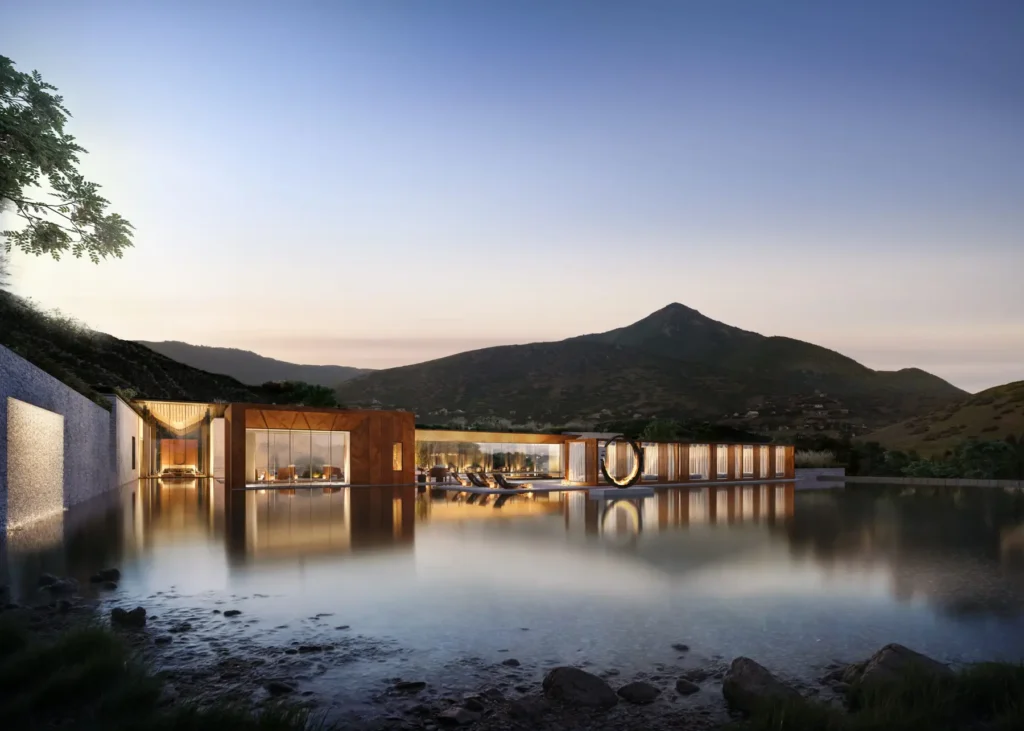
It is also expected to include residences, cottages, luxury guestrooms, and an approximately 50,000-square-foot Wellbeing Centre.
Ameyalli’s wellness positioning matters because it speaks to a larger shift in how people think about quality of life, restoration, longevity, and destination living.
Why the current EB-5 structure deserves attention
EB-5 timing and visa availability are important planning considerations.
The October 2026 Visa Bulletin states that EB-5 receives 7.1% of the worldwide employment-based visa level, with 32% of EB-5 visas reserved for set-aside categories: 20% for rural area investments, 10% for high-unemployment area investments, and 2% for infrastructure projects. The same bulletin lists EB-5 rural, high-unemployment, and infrastructure set-aside categories as current across all listed chargeability areas.
This does not guarantee future availability, processing speed, or individual approval. Visa availability can change, and we must assess each investor’s needs and circumstances individually. But it does make the planning conversation timely.
FPP, Ameyalli, and a more considered EB-5 conversation
FirstPathway Partners recently announced that USCIS approved Form I-956F for Ameyalli Resort & Residences. The approval confirms that USCIS reviewed the project documentation and found it meets the applicable EB-5 programme requirements.
That is why so many partners trust us; we’ve helped hundreds of investors secure their permanent green cards.
Final takeaway
U.S. residency by investment is a powerful search idea, but it needs to be explained with precision. It can support future planning around education, career opportunity, business expansion, family presence, and jurisdictional flexibility.
Ameyalli gives the Singapore EB-5 conversation a stronger centre: a wellness-led U.S. real asset, positioned within a rural EB-5 structure, supported by a current project-level milestone, and connected to the growing demand for wellness real estate.
For families who already think globally, EB-5 is not simply about where they can go, but where they may need to belong.
Begin a considered EB-5 conversation with FirstPathway Partners and explore whether Ameyalli supports your family’s long-term U.S. plans.